The Journal / Planning
Destination Wedding Spain: Regions, Months and Legal Steps
Where to marry in Spain, when to do it, what the law asks of foreign couples and how the day itself usually runs, explained by a wedding filmmaker based in Murcia.
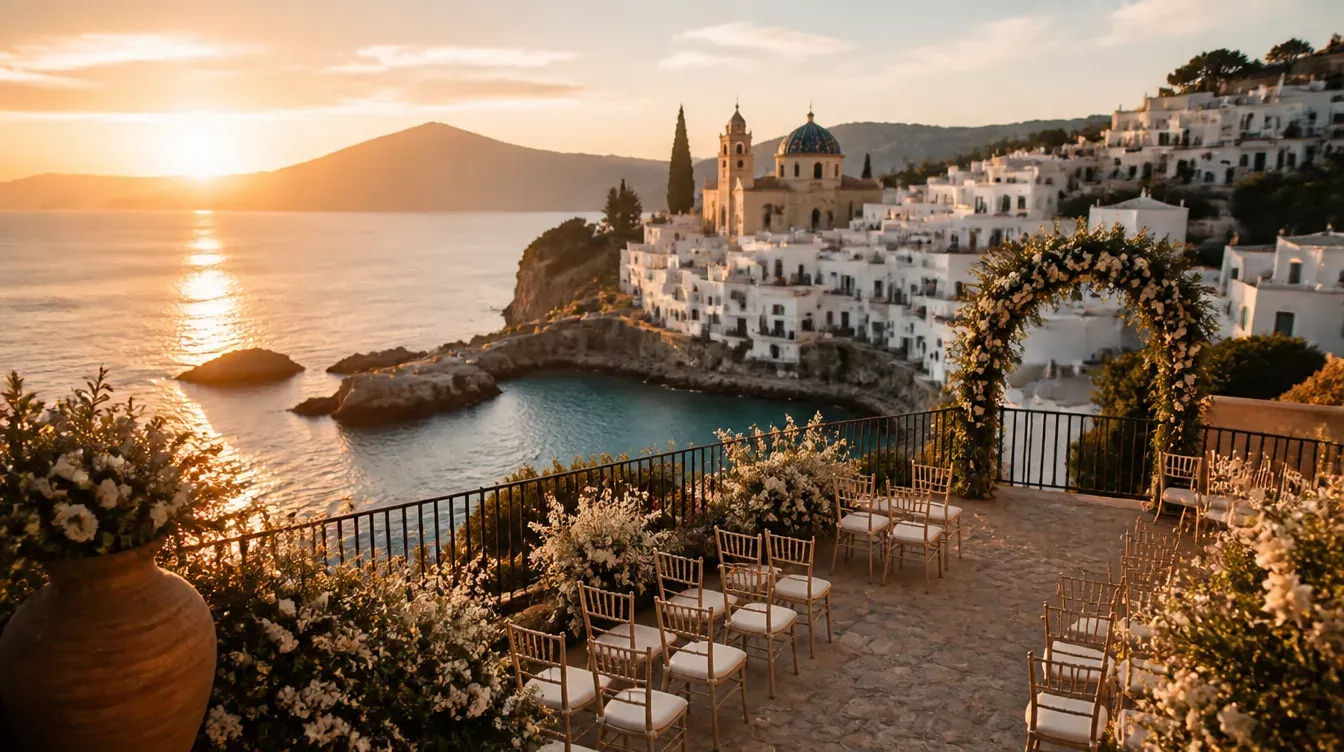
A destination wedding in Spain is straightforward to organise once you know three things. First, a legal civil marriage normally needs one of you to be Spanish or to live here, so most visiting couples marry legally at home and hold a symbolic ceremony in Spain. Second, May, June, September and early October suit most regions. Third, the day runs late: ceremonies in the early evening, dinner at nine or after, dancing past midnight.
I am Ismael Durán, a wedding filmmaker based in Murcia. I film weddings across Spain for Spanish and international couples, and this guide gathers what you need to decide where, when and how.
Why couples choose Spain
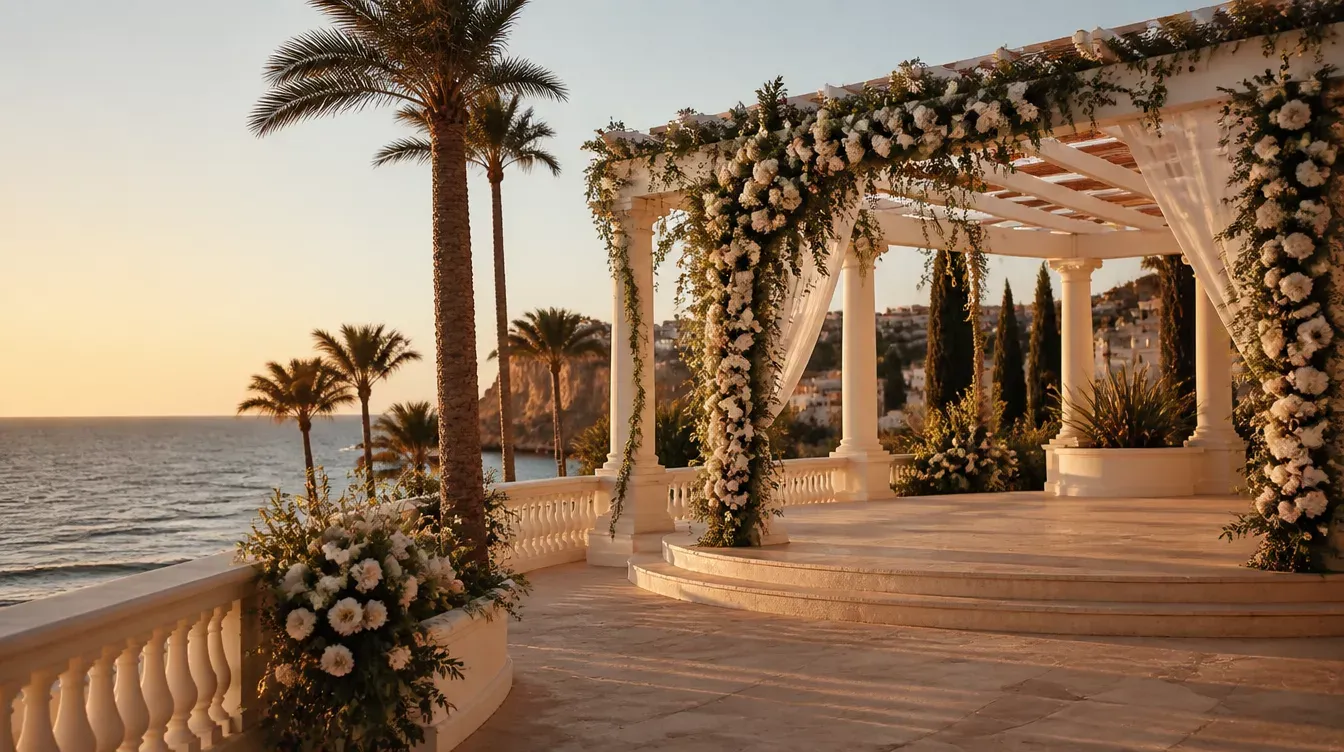
The reasons are practical. The dry season is long, so an outdoor ceremony is a reasonable plan from late spring to early autumn in most of the country. Direct flights link Spanish airports with the UK, Ireland, northern Europe and, through Madrid and Barcelona, North America. English is widely spoken by venues and planners in the areas that host international weddings.
Within one country you can marry on a cliff above the Mediterranean, in a courtyard in a historic city, on a farm estate among olive trees or beside the Atlantic in the north. Spanish weddings are also long, sociable and built around food, which suits a group that has travelled to be together.

The regions compared
This table is a starting point, with the months that tend to work in each place.
| Region | What it is like | Months that work | Main airport |
|---|---|---|---|
| Costa del Sol and Marbella | Beach clubs, villas and hotels between the sea and the mountains | May, June, September, October | Málaga |
| Mallorca | Stone fincas inland, the Tramuntana mountains, coves and Palma’s old town | May, June, September, early October | Palma |
| Ibiza | Rural fincas, sea-view villas and a strong party culture | May, June, September, early October | Ibiza |
| Costa Blanca | Clifftop villas and coastal towns such as Jávea, Moraira and Altea | May to June, September to October | Alicante |
| Barcelona and Costa Brava | City venues, country houses called masias, rocky coves to the north | May, June, September | Barcelona, Girona |
| Seville | Haciendas among olive groves, palaces and courtyards | April, May, October | Seville |
| Granada | Views of the Alhambra, with the Sierra Nevada behind | May, June, September, October | Granada, Málaga |
| San Sebastián | Green hills, Atlantic beaches and Basque food | June to September | San Sebastián, Bilbao |
Costa del Sol and Marbella. A long-established area for international weddings, with a wide choice of suppliers who work in English. Summers are hot but tempered by the sea. See how I work there as a wedding videographer in Marbella and in Málaga, or read the guide to wedding venues on the Costa del Sol.
Mallorca. A wide range in a small space: mountain estates, vineyards, beach hotels and a city. July and August are busy and warm, so the shoulder months are calmer. I cover the seasons in detail in when to get married in Mallorca, and my page as a wedding videographer in Mallorca shows the light there.
Ibiza. Smaller and more informal, with weddings that often centre on a finca or villa and continue as a weekend. Many venues open only for the season. The Ibiza wedding guide and my Ibiza videography page go further.
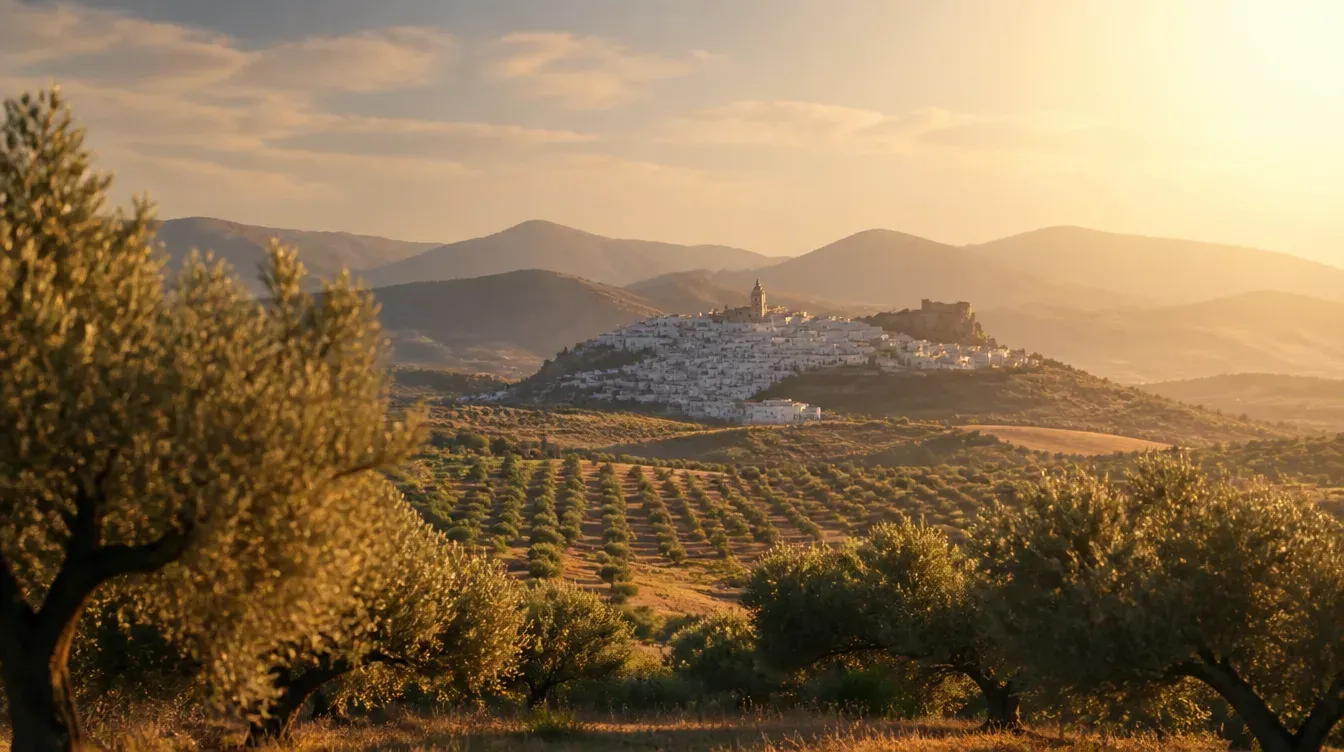
Costa Blanca. Quieter than Marbella and well connected through Alicante airport. I film there regularly, as it is close to my base: here are my pages for the Costa Blanca and Alicante.
Barcelona and the Costa Brava. A good match for couples who want a city for their guests and a country house or a cove for the day itself. August is humid in the city. More on my Barcelona page.
Seville. A city of courtyards, tiles and orange trees, with haciendas in the surrounding countryside. Summer afternoons regularly pass 35 °C, so spring and autumn are the sensible seasons. Read the Seville hacienda weddings guide or my Seville page.
Granada. Cooler nights than Seville thanks to its altitude, and a skyline that is hard to confuse with anywhere else. Many guests fly to Málaga and drive about an hour and a half. See wedding films in Granada.
San Sebastián. A different Spain: mild summers, green landscape and a strong food culture. Rain is possible all year, so a covered alternative is essential. See San Sebastián.
When you have a region in mind, my guide to wedding venues in Spain is the next step.
Legal or symbolic: what foreign couples can do
Spain has three kinds of ceremony, and only two have legal effect.
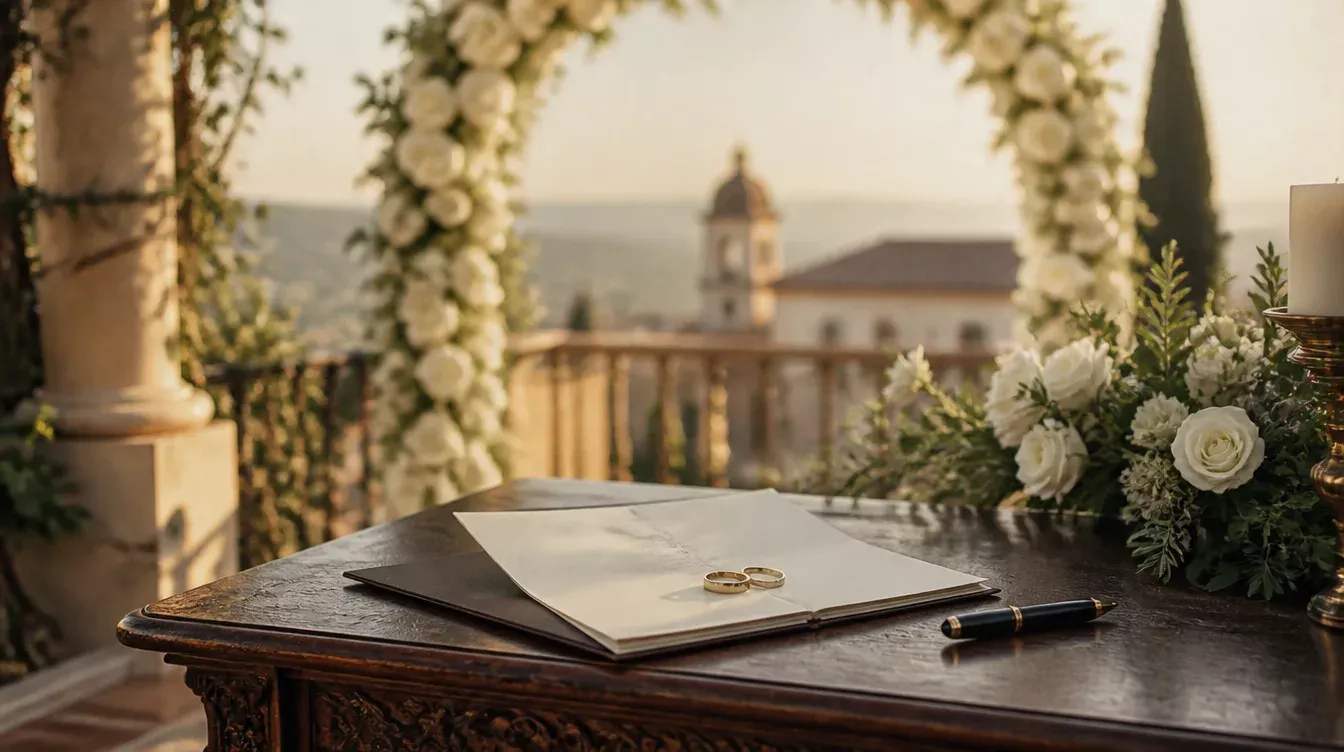
- Civil marriage. Held before a judge, mayor, councillor or notary. As a rule, one of you must be a Spanish national or live in Spain, and the file is opened at the civil registry where that person is registered. It takes time and documents from your home country.
- Catholic marriage. Recognised by Spanish law once it is entered in the civil registry. It is arranged through the parish and diocese where you wish to marry, together with your parish at home.
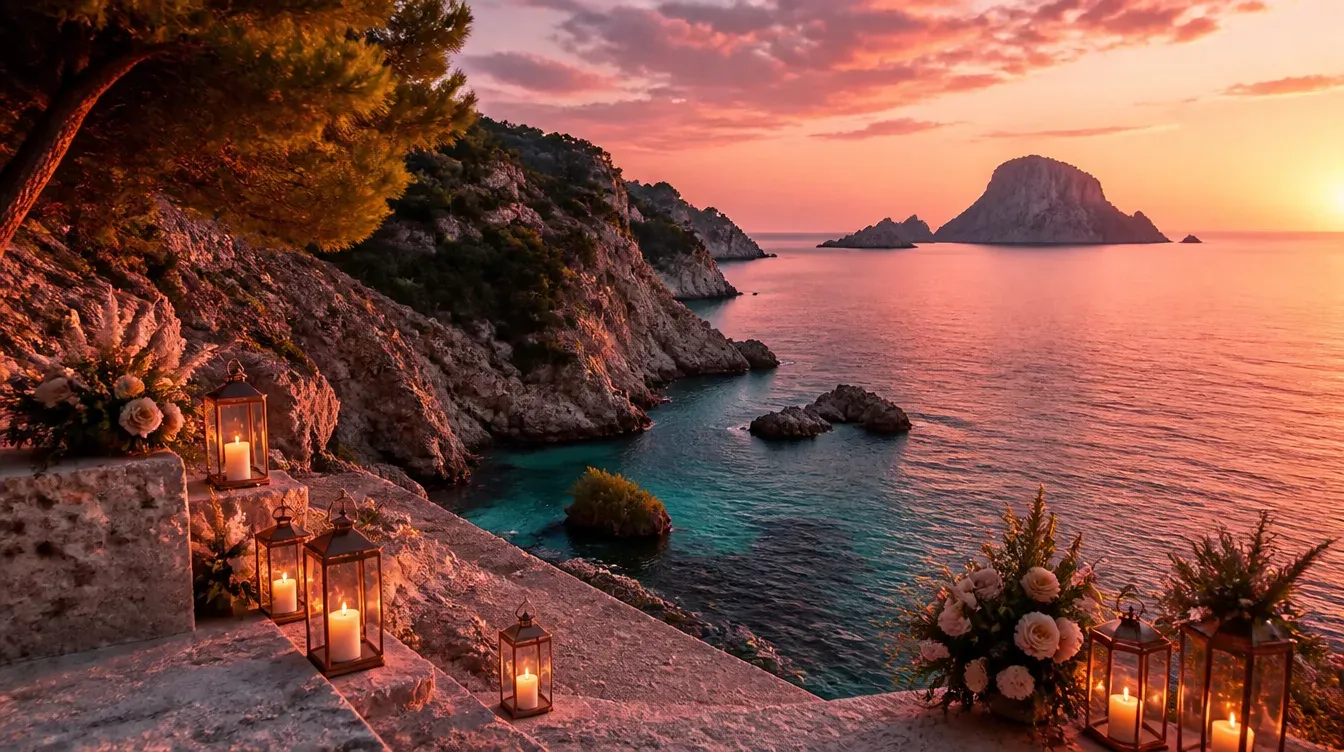
- Symbolic ceremony. No legal effect and therefore no paperwork in Spain. You marry legally in your own country, before or after, and hold the ceremony here with a celebrant, in the place and at the hour you choose.
Most couples who travel to Spain only for the wedding choose the third route. Before you decide, ask two offices: the civil registry (Registro Civil) of the town where you would marry, and your own embassy or consulate in Spain, which can tell you which certificates your country issues and whether a Spanish marriage is recognised at home. Rules differ by nationality and sometimes by registry, so ask for the answer in writing.
The documents and steps are set out in getting married in Spain as a foreigner, and the format of a ceremony without legal effect in symbolic wedding ceremony in Spain. I also have pages for UK couples, Irish couples and American couples marrying in Spain.
Seasons, heat and sunset hours
Spain keeps Central European Time, which pushes sunset late by the clock. That shapes the whole day. Approximate sunset times:
| Place | Mid-May | Late June | Mid-September | Mid-October |
|---|---|---|---|---|
| Marbella | 21:15 | 21:40 | 20:25 | 19:45 |
| Palma de Mallorca | 20:55 | 21:20 | 20:00 | 19:10 |
| San Sebastián | 21:25 | 21:55 | 20:20 | 19:25 |
The clocks go back on the last Sunday of October, and sunset then arrives an hour earlier.
- April and May. Green landscapes and mild days. Evenings can be cool, and showers are more likely than in summer.
- June and September. Warm, dry and long. These are the months most international couples choose, so dates go early.
- July and August. Very hot inland, especially in Andalusia. On the coast and the islands they work with a ceremony late in the afternoon and shade for the guests.
- October. Soft light and warm sea in the south and the islands, with a higher chance of autumn storms on the Mediterranean coast.
- November to March. Mild in the south, with short days and many seasonal venues closed.
How a Spanish wedding day runs
Guests from abroad are often surprised by the hours. A typical summer wedding looks like this:
- Getting ready from early afternoon.
- Ceremony between 17:00 and 19:00, later in high summer.
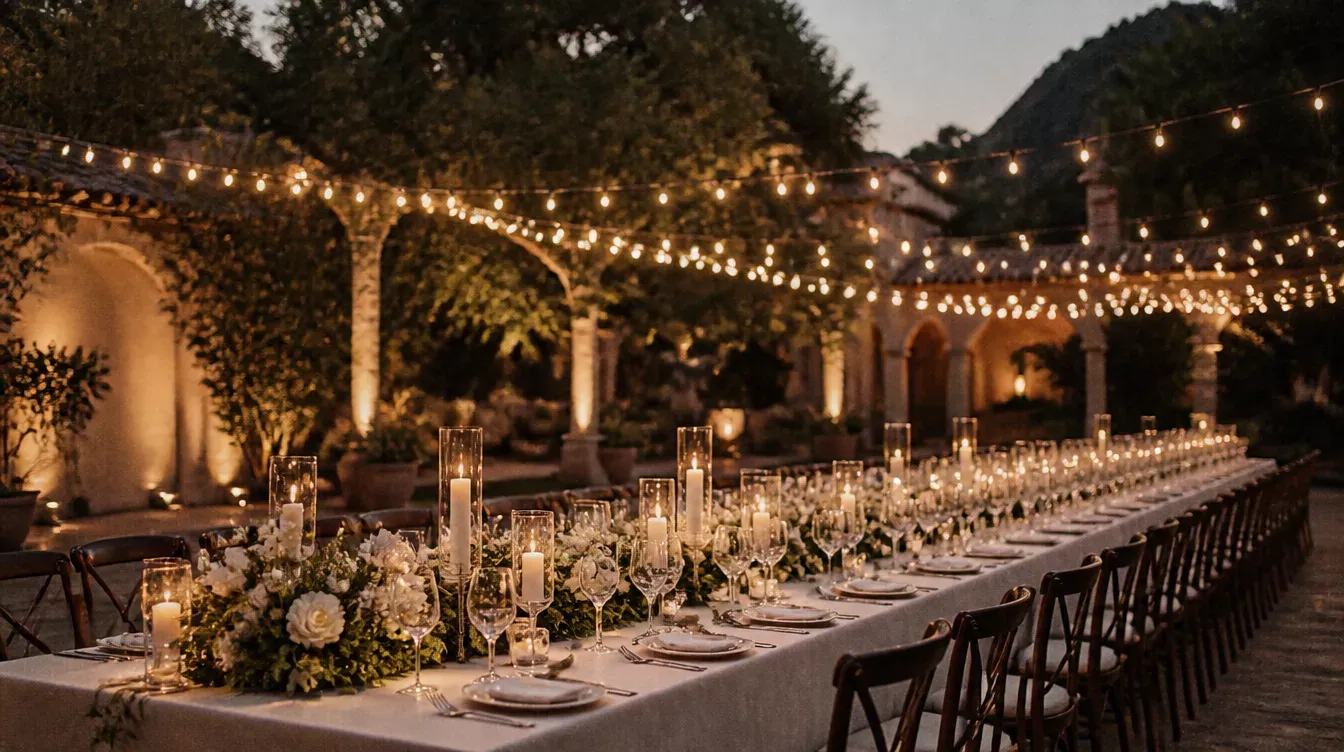
- Drinks and canapés outdoors for an hour and a half to two hours. In Spain this part is generous, almost a meal in itself.
- Dinner from around 21:00, with speeches between courses if you want them.
- First dance and party from about midnight, often with an open bar and a late snack.
Two points to check with any venue: the hour at which outdoor music must stop or move indoors, which depends on the municipality and the venue’s licence, and whether there is a covered space for rain or wind.
Getting your guests there
Choose the airport before the venue. A place that looks ideal on a map can mean two flights and a long drive for an elderly relative.
- Málaga serves Marbella, the Costa del Sol and, by road, Granada.
- Palma and Ibiza have many direct flights in season and far fewer in winter, so check the schedule for your month.
- Alicante serves the Costa Blanca; Valencia is the alternative for its northern end.
- Barcelona and Girona cover the city and the Costa Brava.
- Seville has its own airport and a high-speed train to Madrid.
- San Sebastián airport is small; Bilbao, about an hour away by road, has more routes.
Send a save-the-date with the airport and the dates as soon as the venue is signed. A shuttle between hotels and the venue solves most problems on the day, including the journey home at three in the morning.

A planning timeline from abroad
- 12 to 18 months before. Decide region and month, visit or video-call venues, sign the venue and, if you want one, the planner.
- 9 to 12 months. Book the photographer, the film and the music. Send save-the-dates. Start the legal process at home if the Spanish ceremony will be symbolic.
- 6 months. Guest transport, accommodation blocks, celebrant, flowers.
- 3 months. Menu tasting if you can travel, the timeline of the day, the wet-weather plan.
- The final month. Final numbers, seating, and a call with each supplier to confirm hours.
The full list, month by month, is in my wedding planning checklist and timeline. For budgets, see how much a wedding in Spain costs, and for what venues and planners bundle together, destination wedding packages.
What changes for your wedding film in Spain
Three things are different from a wedding in northern Europe.
The light. At two in the afternoon in summer the sun is high and hard: deep shadows under the eyes, guests squinting, white dresses that burn out. A ceremony two to three hours before sunset gives softer light on your faces and leaves the last hour of sun for a few minutes alone together.
The late sunset. In June the light you want for portraits arrives around nine in the evening, exactly when dinner is due. Agree with your planner a short pause between drinks and dinner, or between courses, so nobody has to choose.
The sound. Outdoor ceremonies bring wind, sea and cicadas, and a camera microphone records all of them louder than your voices. I record vows and speeches on discreet microphones, so the words stay clear.
I film in a documentary way, with natural light and without posing, and I speak with your photographer and planner before the day so the timeline works for everyone. Drone shots are possible when the weather and local regulations allow.

Next step
If you already have a date or a region, I can tell you quickly whether I am free: I film one wedding per date and reply personally within 24 hours. Collections for destination weddings start from €2,500.

You can watch complete films in the portfolio or on my destination wedding videographer in Spain home page, read how I work as a destination wedding videographer, and then book a video call or send me your date and venue.
Questions
Can two foreigners legally marry in Spain?
Only in some cases. A civil marriage normally needs one of you to be a Spanish national or to live in Spain, so couples who fly in for the wedding usually marry legally at home and hold a symbolic ceremony here. The civil registry of the town where you plan to marry and your own consulate can confirm what applies to you.
Which month is good for a destination wedding in Spain?
May, June, September and early October suit most of the country, with warm days and long evenings. July and August are very hot inland, so they work mainly on the islands and the coast with a late ceremony. In the north, around San Sebastián, the season is shorter and rain is possible in any month.
What time do weddings start in Spain?
Later than in most countries. A summer ceremony often begins between five and seven in the evening, drinks follow outdoors, dinner is served around nine or later and the dancing starts close to midnight. Tell your guests in advance, and ask your venue when outdoor music has to end.
Which Spanish region is easiest for guests to reach?
The areas around large airports. Málaga serves Marbella and the Costa del Sol, Palma serves Mallorca, Alicante serves the Costa Blanca and Barcelona serves the city and the Costa Brava. Granada and San Sebastián have small airports, so many guests fly to Málaga or Bilbao and continue by road.
How far ahead should we plan a wedding in Spain?
Twelve to eighteen months is a comfortable lead time for a Saturday between May and October, because venues fill those dates first. Shorter notice is possible on weekdays and in the quieter months. For the film, I advise booking six to twelve months ahead, since I take one wedding per date.
Do we need a wedding planner if we live abroad?
It is not compulsory, but it helps a great deal. A planner based in the region knows the venues, the local rules on music and timing, and the suppliers who work well together, and can visit places for you. If you prefer to plan alone, choose a venue with its own coordinator.