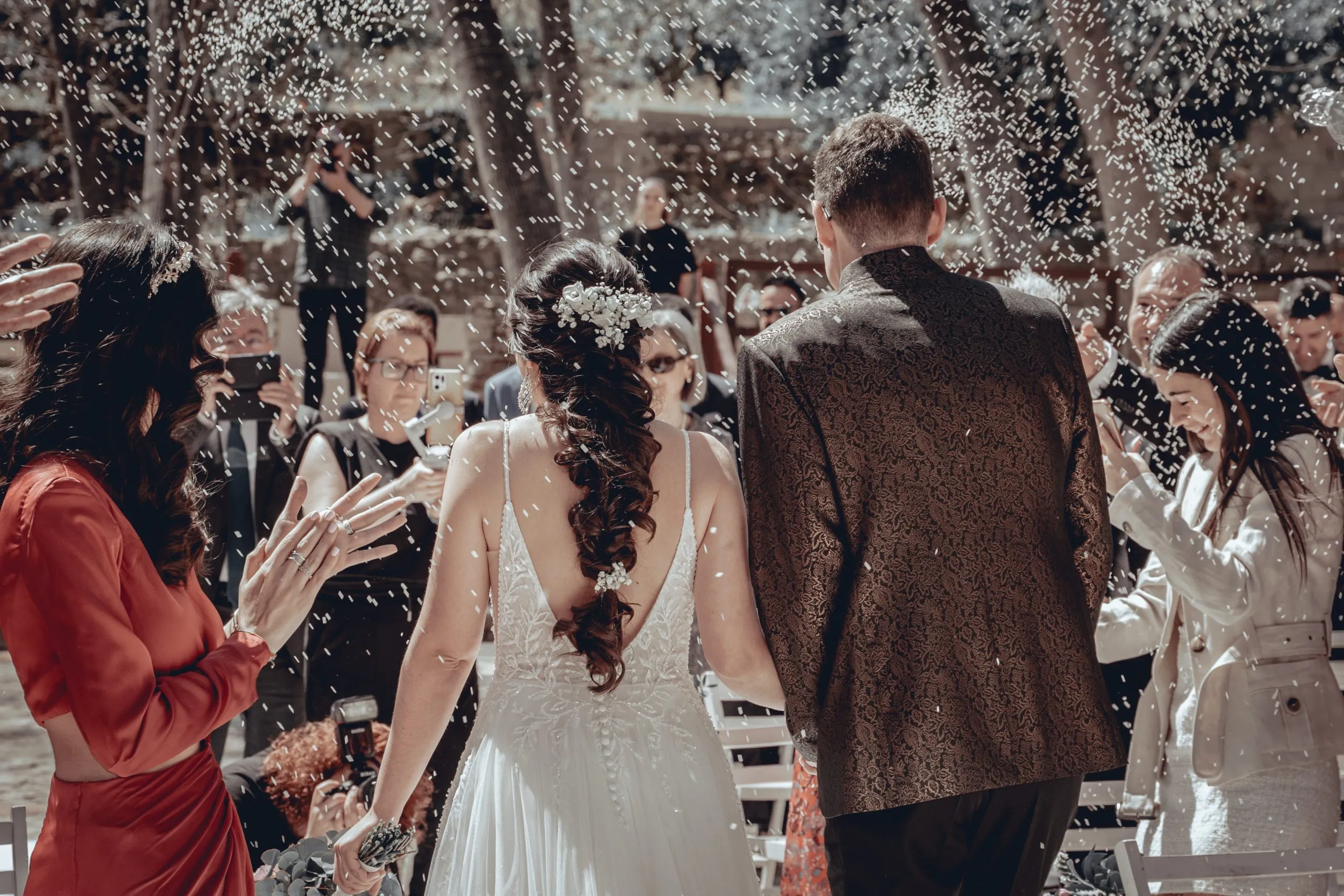
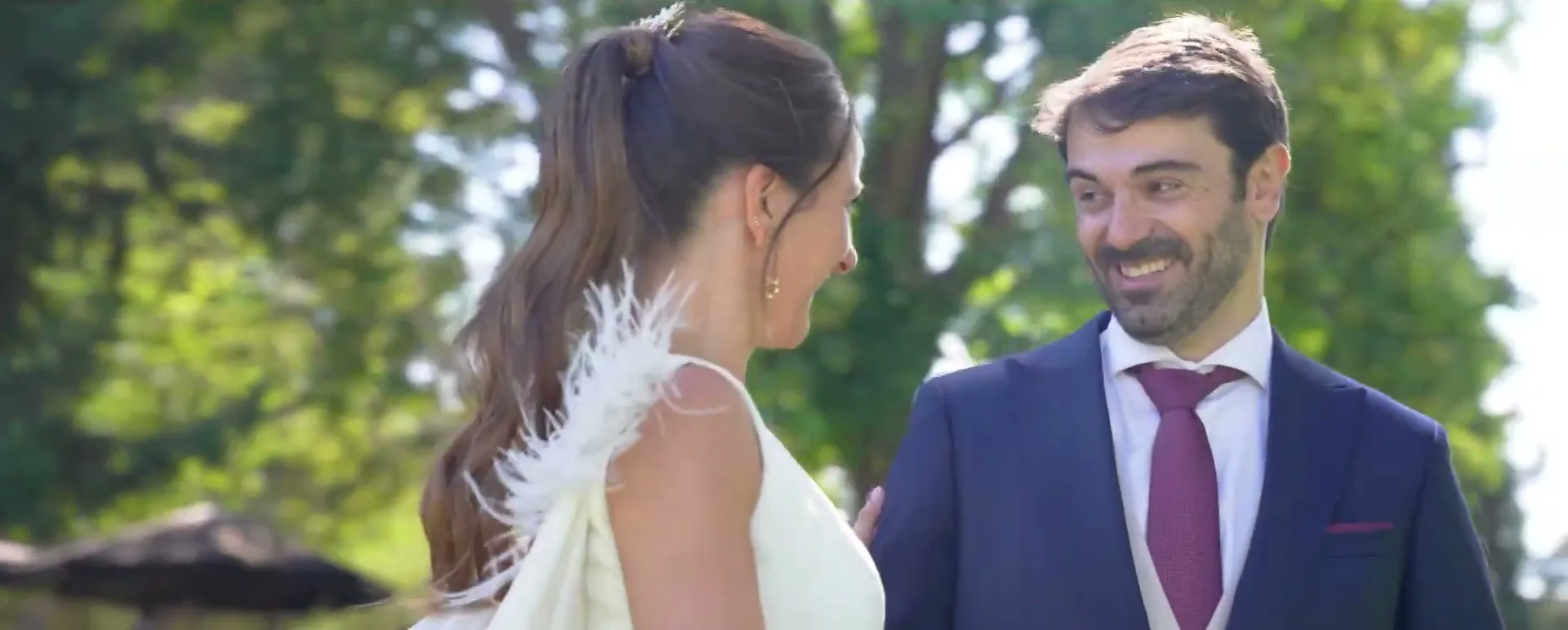
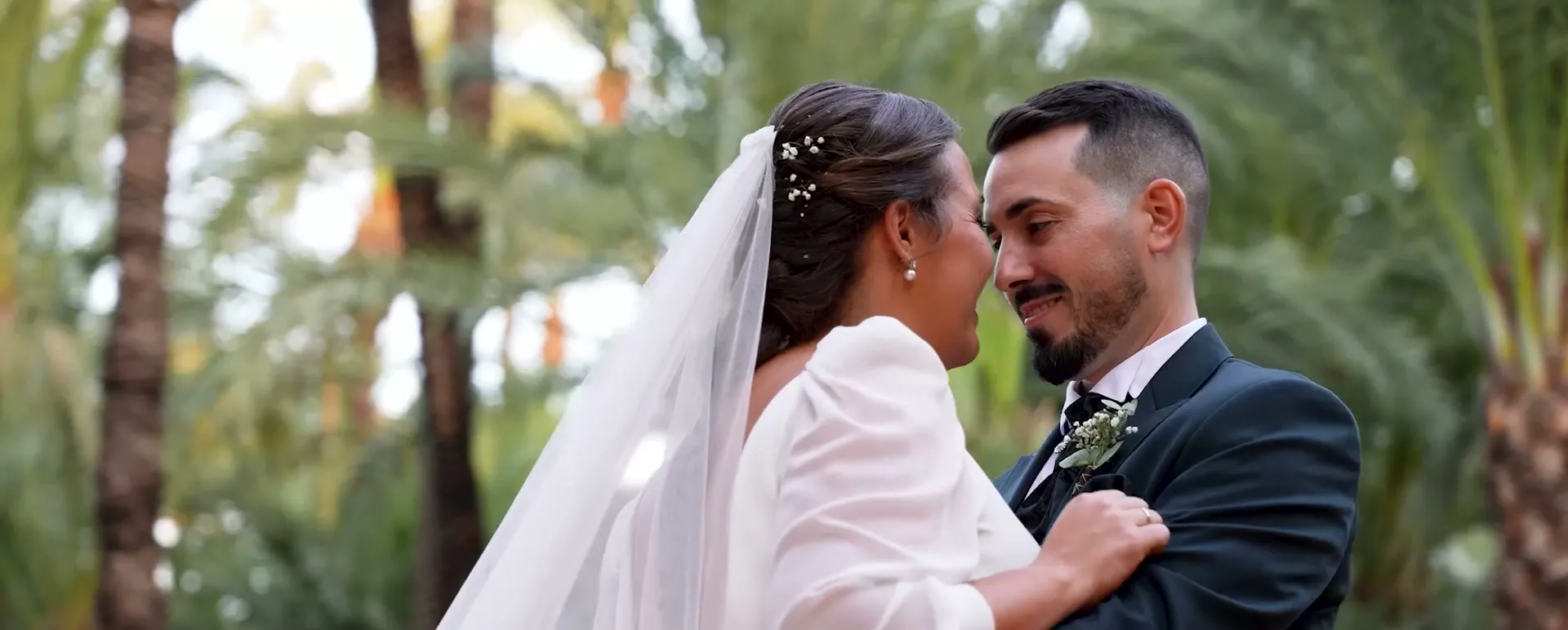
Set the ceremony by the sunset, month by month
The sun sets in Granada at about 9.15pm in mid-May, 9.40pm in late June, 9.05pm in mid-August, 8.20pm in mid-September and 7.35pm in mid-October. After the clocks change at the end of October it is down by about 6.20pm.
The Alhambra faces the Albaicín across the Darro valley, so from a carmen or a viewpoint the low sun comes over your shoulder and the walls turn from ochre to red in the final 45 minutes. Behind them, the peaks of the Sierra Nevada hold the light a little longer, and they usually keep snow into late spring.
For the film, I would place an outdoor ceremony so that it ends about an hour and a half before sunset. That leaves the drinks reception in soft light and 20 minutes for the two of you alone while the walls are red. Down in the narrow Darro valley the shade arrives earlier than the official time, so allow half an hour more there.
The Alhambra and the viewpoints: what a wedding party may do
The Alhambra and the Generalife are managed by a public board, the Patronato, and wedding reports inside the monument are regulated. They take place during visiting hours, alongside ordinary visitors, only in the spots the Patronato sets aside, with an authorisation requested at least 15 days ahead and a public fee. The date is not held until that fee is paid, so decide early if you want it, and ask the Patronato which spaces are open that season rather than counting on the Nasrid Palaces.
No authorisation is needed in the open areas around it: the Palace of Charles V, the Plaza de los Aljibes, the Cuesta de los Chinos and the paths outside the walls.
The Mirador de San Nicolás is a public square and it is crowded at sunset all year. I would rather take you there early in the morning, or use a quieter terrace nearby, than compete for a place in the last light.
Where the drone can fly, and where it stays in its case
Drone flights in Spain depend on the airspace over each address, which is checked on the ENAIRE Drones map before every job. Granada is more restricted than most cities. The airport lies to the west in the Vega, and the Armilla air base, a military helicopter base, is about four kilometres south-west of the centre, so much of the city and the plain falls inside controlled airspace, where a flight must be coordinated in advance and can be refused.
Over the Alhambra and its grounds any filming, aerial work included, needs the Patronato's permission, and flying above the busy lanes of the Albaicín brings the extra requirements of an urban area. In practice I do not plan aerial shots of the monument for a wedding.
The drone makes more sense at a cortijo in open country or on the coast. Send me the venue address and I will tell you what is possible there before you count on those shots.
Heat by day, cool by night, and the venue that suits each
In July and August the average afternoon high in Granada is around 34°C, and days above 40°C do happen. Because the city stands at almost 700 metres, the nights fall to about 18°C, noticeably cooler than on the coast. I would not start an outdoor summer ceremony before 7.30pm, and in May, late September and October your guests may want a shawl for dinner in the garden.
A carmen is a walled house and garden on the Albaicín hillside: Alhambra views, small terraces, steps and access on foot, so I carry less equipment and allow more time. A cortijo in the Vega or the Lecrín Valley gives room, parking and open sky. City palaces and hotels keep everyone indoors and cool. The Costa Tropical, about an hour south, is milder in spring and autumn and more humid in August. Ask each venue about its music curfew before fixing the timetable.