The Journal / Planning
Symbolic Wedding Ceremony in Spain: Why Most Couples Choose It
Legally marry at home, then say your vows anywhere in Spain: on a cliff, in an orange grove, or by the sea.
A symbolic wedding ceremony in Spain is a ceremony with no legal effect, held where you like and led by whoever you choose, while the legal paperwork is done in your home country. For couples planning from abroad, it removes most of the bureaucracy and keeps what matters: the words, the people and the place. Here is how it works, and how to plan one that looks and sounds beautiful on film.
What a Symbolic Wedding Ceremony in Spain Actually Is
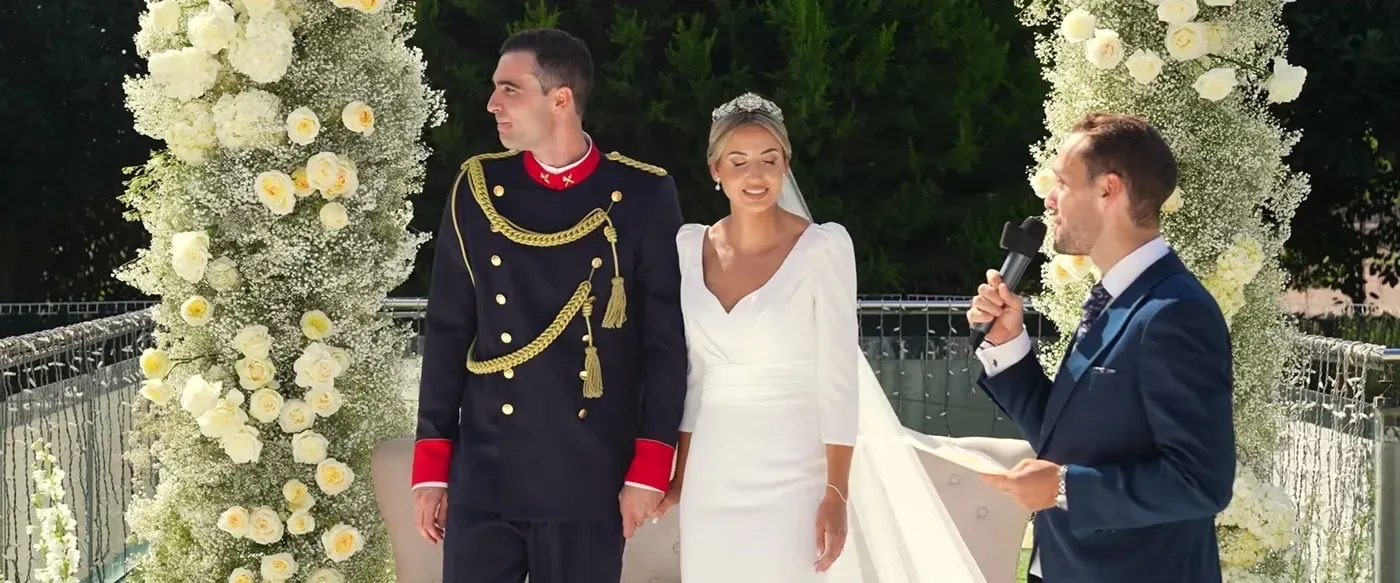
A symbolic ceremony looks and feels like any other wedding. There is an aisle, there are vows and rings, and there is a moment when everyone stands up and cheers. The difference is only on paper. Nothing is signed that the Spanish state recognises as a marriage.
Because it is not a legal act, it is not regulated in the way a civil or church wedding is. That means:
- No residency requirements for the ceremony itself.
- No documents to translate and legalise for a Spanish registry.
- No fixed script, no set wording and no required officiant.
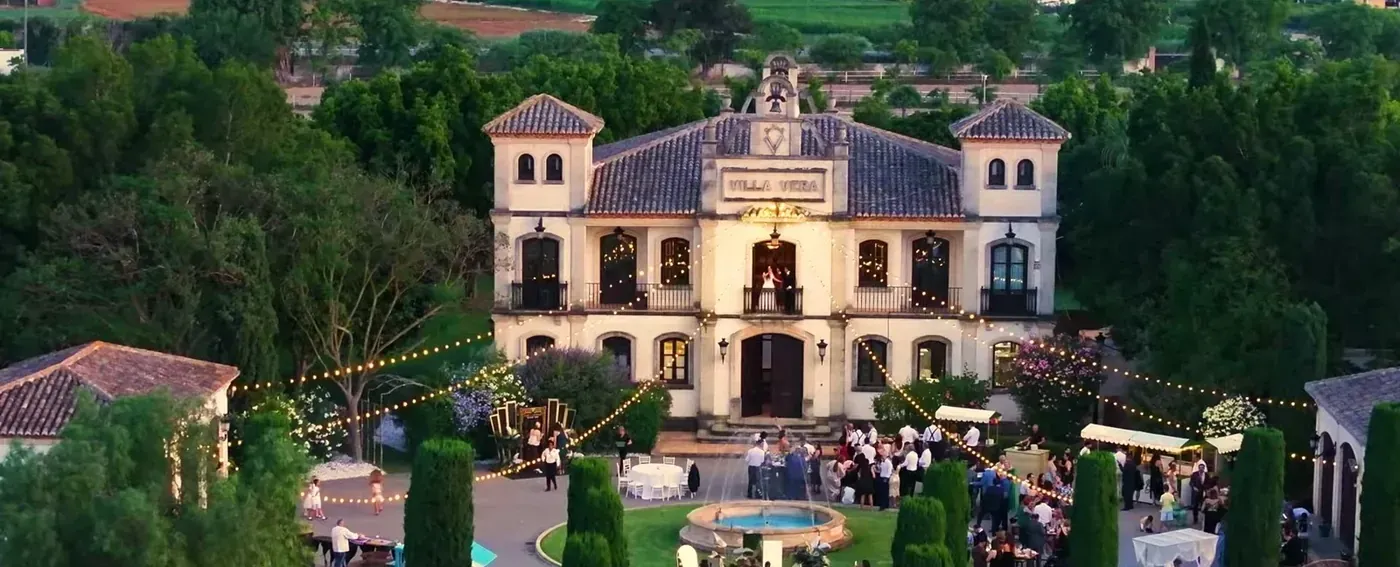
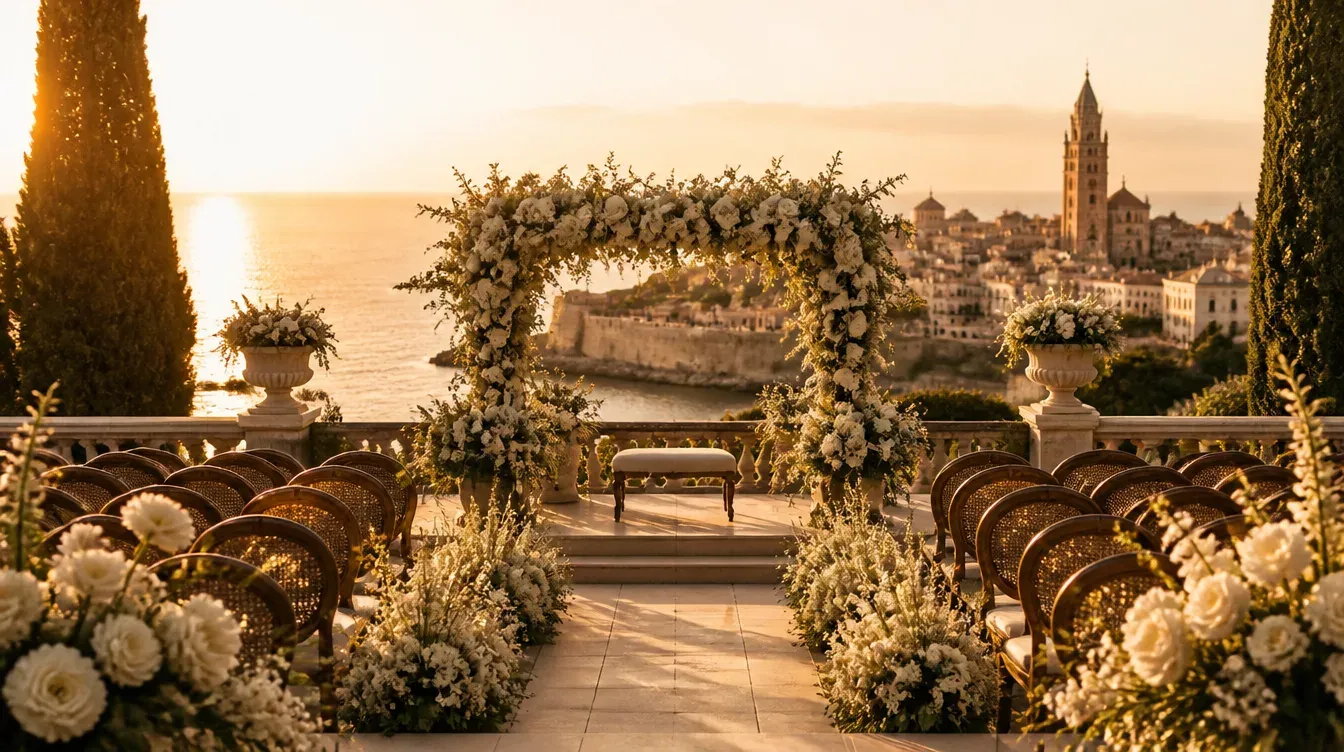
You decide the order, the readings, the music and the language. If your families speak different languages, the ceremony can move between them. It can be held in a garden, a courtyard, an olive grove or a terrace above the sea, depending only on what your venue allows.
Why Most Foreign Couples Choose a Symbolic Ceremony Over a Legal Wedding in Spain
The short answer is paperwork. A legal civil marriage in Spain generally requires at least one partner to be Spanish or resident in Spain, and the file can take months to process. Requirements vary between registries and between nationalities, so always check with your own consulate or registry office.
Beyond the paperwork, couples tend to choose a symbolic ceremony for a few clear reasons:
- Freedom of place. You are not tied to a town hall or a church. The ceremony happens where the rest of your day happens.
- Freedom of time. You can set the ceremony for the hour when the light is softest, rather than around an office timetable.
- Freedom of content. You can write your own vows, invite a friend to speak and include a ritual that means something to you.
- Language. The whole ceremony can be in English, or in two languages, so every guest understands every word.
- Simplicity at home. Marrying legally at home avoids having a foreign marriage certificate recognised, translated or registered afterwards.
The result is a ceremony that feels personal rather than procedural, which is exactly what most couples travel to Spain for.
How the Legal Side Works: Registry Office at Home, Celebration in Spain
The usual approach is simple. You marry legally in your home country, often in a short registry office appointment with a couple of witnesses, and you hold your wedding celebration in Spain.
A few practical points:
- Check notice periods at home. Many countries require you to give notice some weeks before a registry appointment. Book it early.
- Decide on the order. Some couples sign the papers a few days before Spain, others a few weeks after. Either works.
- Keep it small or make it a moment. Some couples treat the registry office as pure formality. Others turn it into a quiet lunch with parents.
If you are still weighing up a legal ceremony in Spain, my guide to getting married in Spain as a foreigner covers the options in more detail.
Symbolic vs Civil vs Religious Ceremonies in Spain: A Clear Comparison
| Symbolic | Civil (Spanish law) | Religious | |
|---|---|---|---|
| Legal effect | None. You marry legally at home. | Legally binding. | Catholic weddings are legally recognised in Spain; other faiths have their own rules. |
| Who leads it | Anyone: a celebrant, a friend or a family member. | A public official, such as a judge, mayor, councillor or notary. | A priest or minister of the faith. |
| Where | Wherever your venue allows. | Usually a town hall or a place the authority permits; this varies by municipality. | Usually a church or place of worship. |
| Paperwork for foreign couples | Minimal for the ceremony itself. | Often extensive, usually with residency requirements. | Parish paperwork, often both at home and in Spain. |
| Freedom over content | Complete. | Limited to the legal format, with some personal touches. | Follows the rite of the faith. |
There is no right answer. A church wedding can be deeply meaningful, and a civil ceremony can be simple and moving. But for couples who want a celebration shaped entirely around them, the symbolic route is the most flexible.
Choosing a Celebrant and Writing a Ceremony That Feels Like You
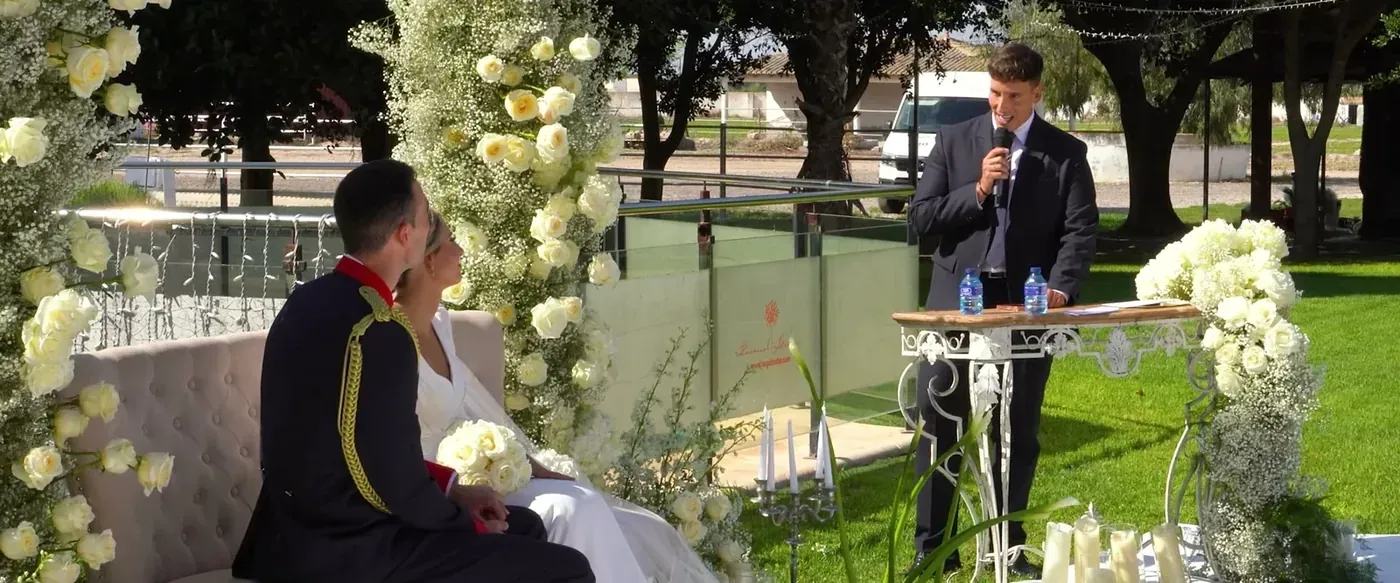
Since a symbolic ceremony has no legal weight, anyone can lead it. Couples usually choose between two options.
A professional celebrant knows how to pace a ceremony, hold the attention of a hundred guests and handle a nervous moment gracefully. Many meet couples online in the months before, ask about your story and write a script with you. If you need two languages, look for a celebrant who works comfortably in both.
A friend or family member brings something no professional can: they know you. The risk is nerves and timing, so give them a clear structure and ask them to rehearse aloud.
Whoever leads it, a simple structure helps:
- Welcome and a word about the people who could not be there
- Your story, told briefly and with some humour
- A reading, by a friend or relative
- Your vows
- The rings
- A ritual, if you want one
- The declaration and the kiss
- The exit, with music your guests will remember
Most symbolic ceremonies last between 20 and 40 minutes. Shorter feels rushed; much longer and guests in the sun start to fidget.
One note from behind the camera. I record real sound on discreet microphones, so your vows, the readings and the laughter are heard clearly in the film. A celebrant who speaks towards your guests rather than down at a script makes a real difference, and I coordinate these details with your planner and photographer before the day.
Where to Hold It: Villas, Fincas and Coastal Venues from the Costa Blanca to Marbella
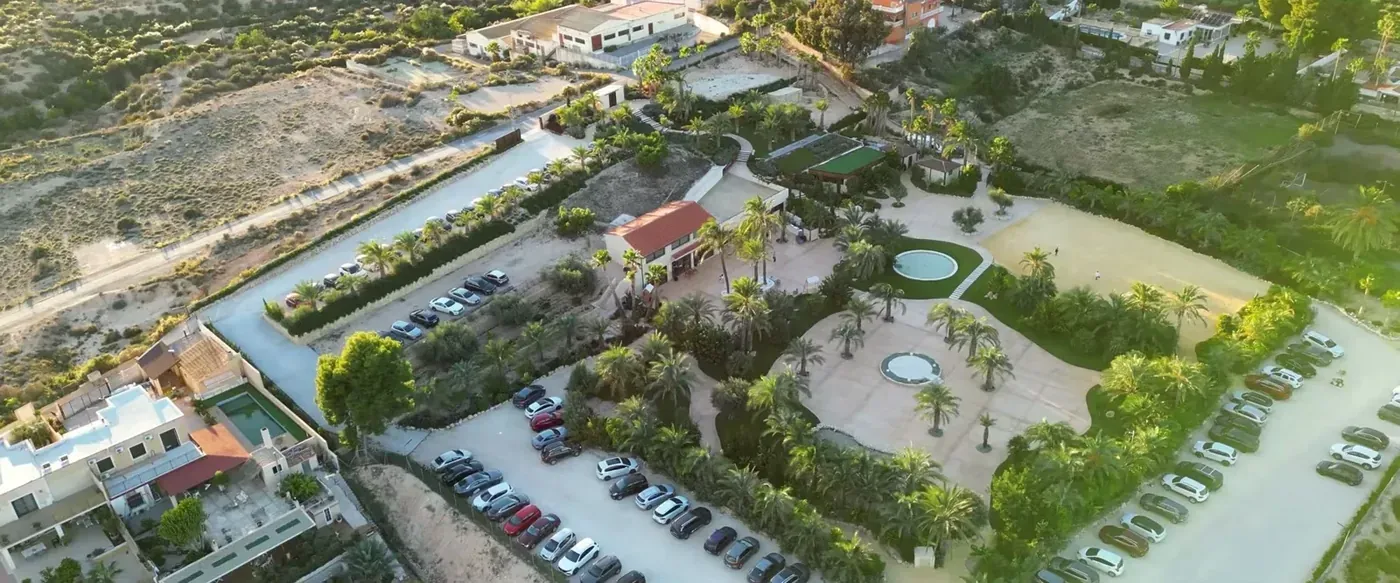
The freedom of a symbolic ceremony really shows in the choice of setting.
- Private villas give you privacy and a relaxed, house-party feeling, with the ceremony often on a lawn or terrace.
- Fincas, the rural estates found across Spain, often come with olive or citrus groves, old stone buildings and space for the ceremony, dinner and dancing in one place.
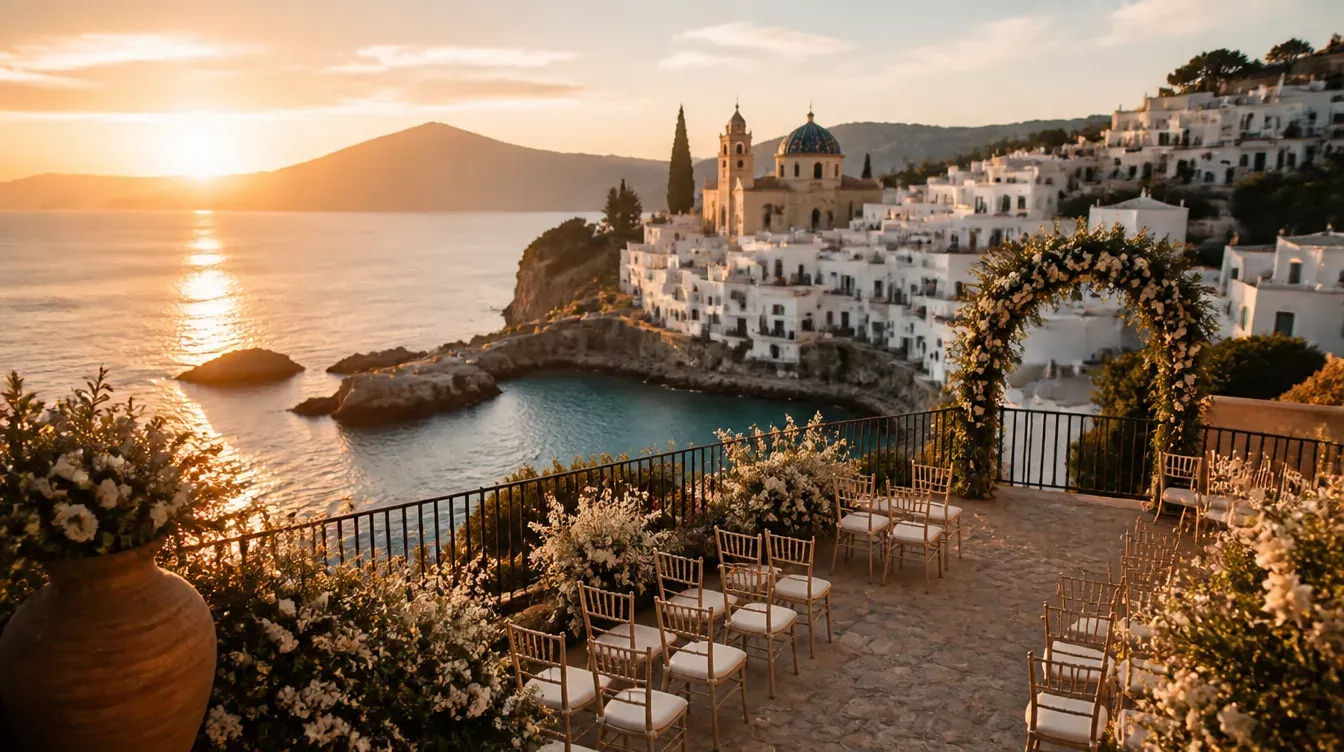
- Coastal venues put the sea behind your vows. On the coast, plan for wind, which affects hair, veils and sound.
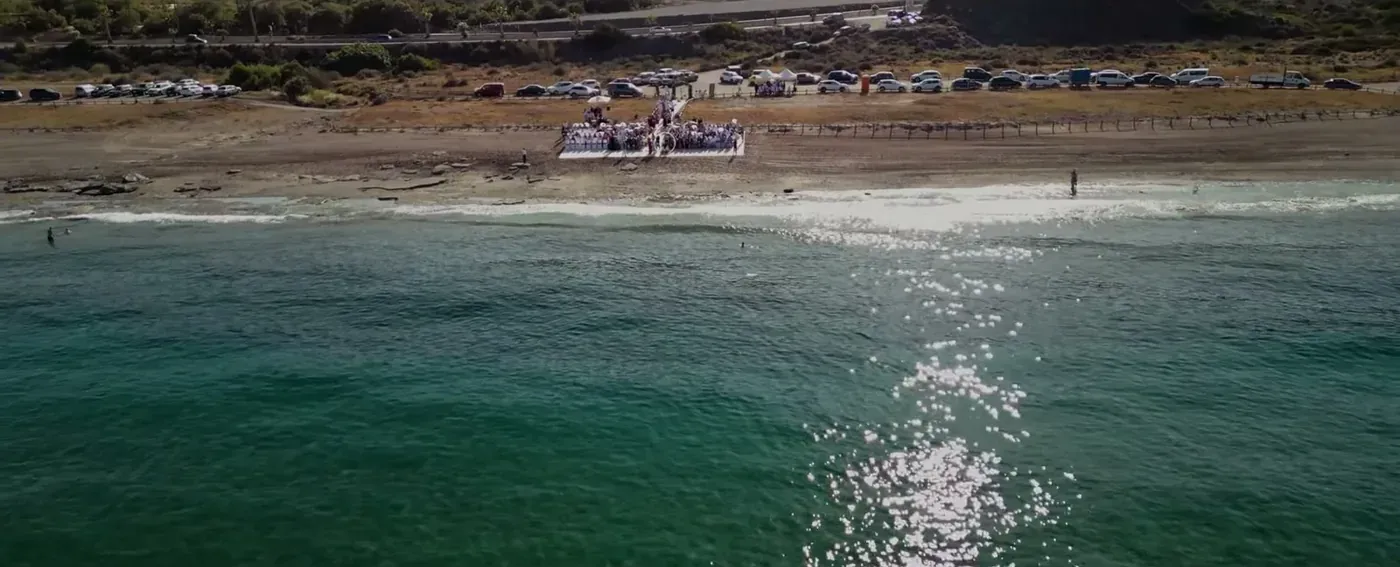
- Beaches are possible, but beaches in Spain are public, and ceremonies usually need permission from the local town hall. Your planner or venue will know the process.
I am based in Murcia and regularly film in the Region of Murcia, Alicante and the Costa Blanca. For ideas, see my guides to the best Murcia wedding venues and the top Alicante wedding venues. Further south, the best wedding venues on the Costa del Sol cover Marbella and the surrounding coast, where I also film as a wedding videographer in Marbella.
For a sense of how open landscape and natural light come through on film, watch Antonio & Isabel’s wedding on the salt flats of Torrevieja.
Rituals, Timing and Light: Planning a Ceremony That Looks Beautiful on Film
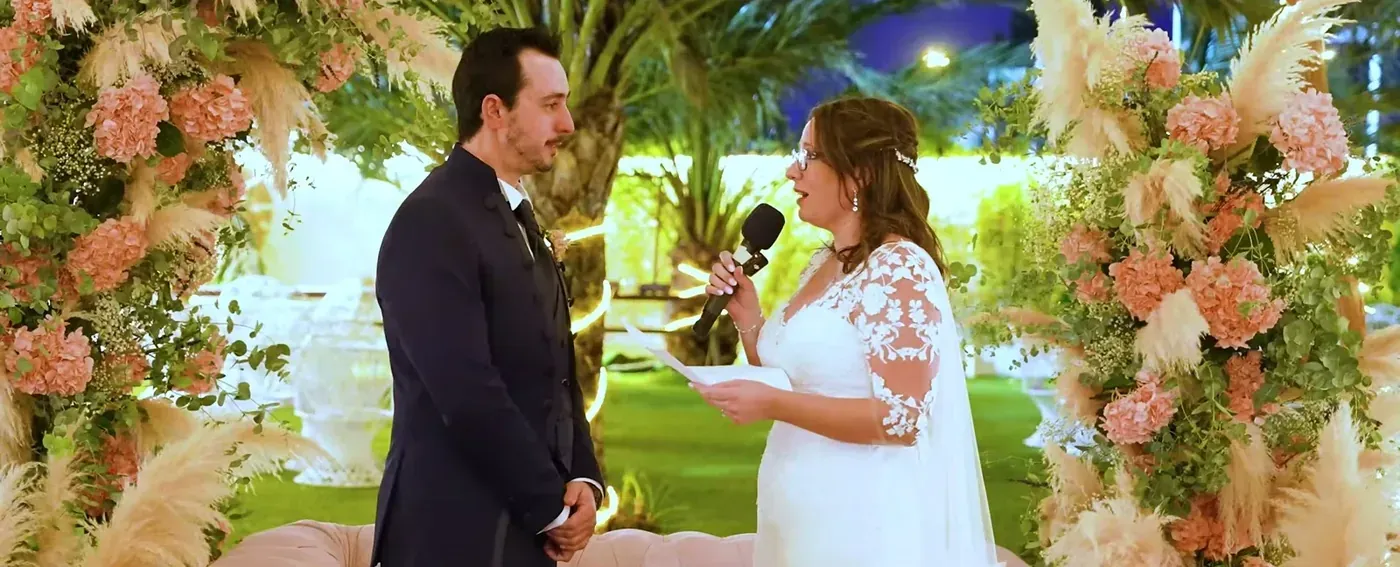
Rituals
A ritual gives the ceremony a visual moment and a pause for emotion. Popular choices include:
- Handfasting, tying your hands together with ribbon or cord
- Ring warming, passing the rings among guests to hold and bless
- A wine box or letter ceremony, sealing letters to open on an anniversary
- A sand ceremony, blending two colours into one vessel
Choose one that means something to you. One well-chosen ritual is better than three rushed ones.
Timing and light
The Spanish sun is strong, and harsh midday light is unkind to faces and to guests in suits. In summer, the sun sets well after 9pm on much of the mainland, so many couples hold the ceremony in the late afternoon and save the golden hour for portraits and the drinks reception. In spring and autumn the light softens earlier, which gives you more flexibility.
A few other things that help:
- Face the right way. Ask your venue where the sun will be at ceremony time, so you are not squinting and guests are not blinded.
- Think about shade for older guests, and water for everyone.
- Ask for an unplugged ceremony. Fewer phones in the air means clearer faces in your film.
- Leave a little time after the kiss. The hugs straight after the ceremony are often the most honest moments of the day.
When the weather and local regulations allow, I add drone shots, which show the setting in a way no ground camera can.
Choosing Your Wedding Filmmaker and Checking Your Date Early
A symbolic ceremony is usually the most personal part of a destination wedding, so it is worth choosing someone whose way of working suits it. My approach is cinematic, editorial and documentary: natural light, real moments, no posing and no script. I speak English and Spanish, so I can work with you, your celebrant and your Spanish suppliers in both languages.
I film one wedding per date, with no other wedding that day. Before the day, I coordinate with your photographer and wedding planner. Afterwards, every film is edited calmly, and delivery takes 2 to 4 months depending on the season. For destination weddings, collections start from €2,500, and I send the exact price within 24 hours of your enquiry.
It is advisable to book 6 to 12 months ahead, and earlier for Saturdays from May to October. If you are comparing options, my guide on how to choose a wedding videographer in Spain sets out the questions worth asking.
Planning a wedding here? I film one wedding per date, so the first step is checking yours. Check your date and I will reply personally within 24 hours.
Questions
Is a symbolic wedding ceremony in Spain legally binding, and what do we need to do at home first?
No, a symbolic ceremony has no legal effect in Spain. Most couples marry legally at a registry office in their home country, either before or after the celebration in Spain. Check the notice period at home early, as many countries require you to give notice some weeks in advance.
Can a symbolic ceremony take place on a beach or at a private villa in Spain?
Yes. Private villas and fincas are popular because the ceremony, dinner and party can all happen in one place, subject to the venue's own arrangements. Beaches in Spain are public, so a beach ceremony usually needs permission from the local town hall, which your planner or venue can help with.
Who can officiate a symbolic wedding in Spain, and can a friend or family member lead it?
Anyone can lead a symbolic ceremony, because it is not a legal act. Some couples choose a professional celebrant for their experience with pacing and structure, while others ask a friend or relative who knows them well. If a friend leads it, give them a clear structure and ask them to rehearse aloud.
How long does a symbolic ceremony last, and what time of day is best for photos and video?
Most symbolic ceremonies last between 20 and 40 minutes. Harsh midday sun is best avoided, so in summer many couples hold the ceremony in the late afternoon and keep the golden hour before sunset for portraits. Ask your venue where the sun will be at ceremony time so you and your guests are not facing straight into it.