Place the ceremony by the month's sunset
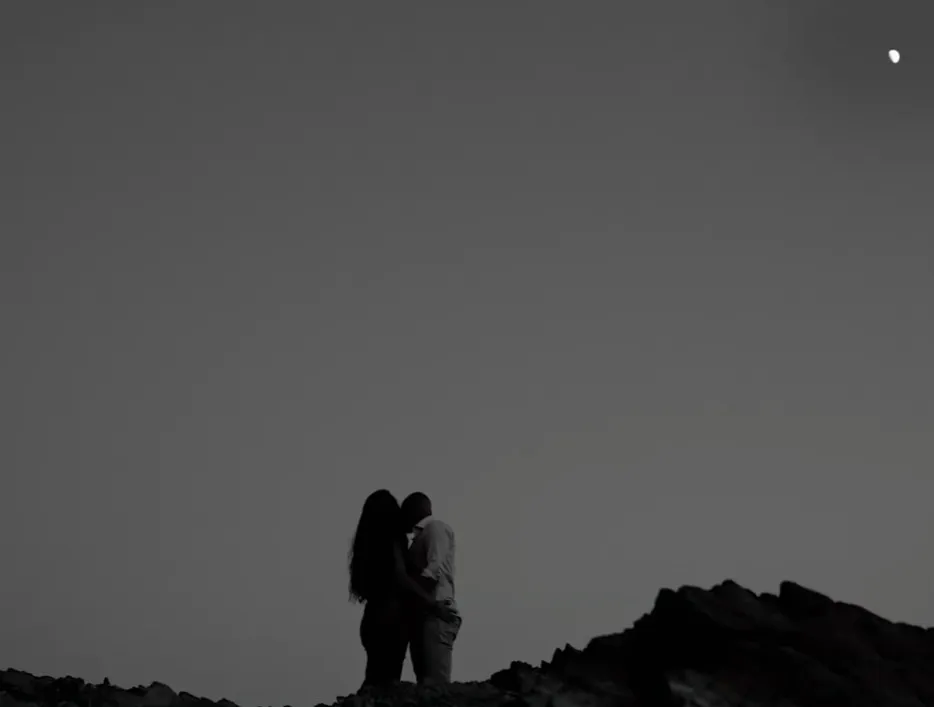
In Málaga the hour of your ceremony depends on the month. The sun sets around 21:40 in late June, around 20:00 in early October and around 18:00 in early December, and dusk follows about half an hour later. I film in natural light, so I suggest starting a private ceremony about two and a half hours before sunset. You finish in softer light, with time for portraits before dinner.
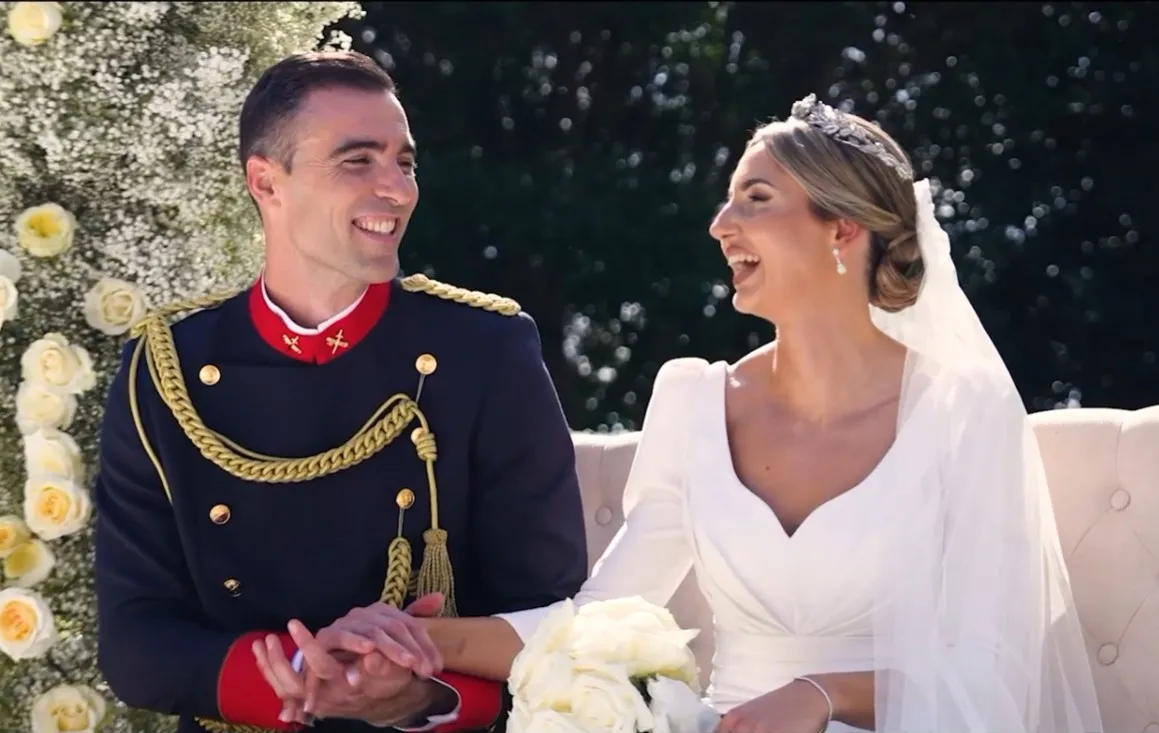
A civil ceremony may set the hour for you. At La Concepción, the historic botanical garden in the city, slots run on Saturdays from May to September at 17:00, 18:30 and 20:00. In June the 20:00 slot leaves about an hour of low light after you finish. By September the sun is setting as you finish, so 18:30 is the calmer choice. Mijas holds civil ceremonies around midday on Fridays, when the light is harder, so I would keep your portraits for late afternoon. Confirm current slots with the town hall before you plan around them.
Terral, gusts and what your vows sound like
The wind that changes a Málaga wedding is the terral, which blows from land to sea and lifts the temperature suddenly. It can arrive in any season, so a May or September day can turn hot without warning. The wind can also turn gusty when it changes direction.
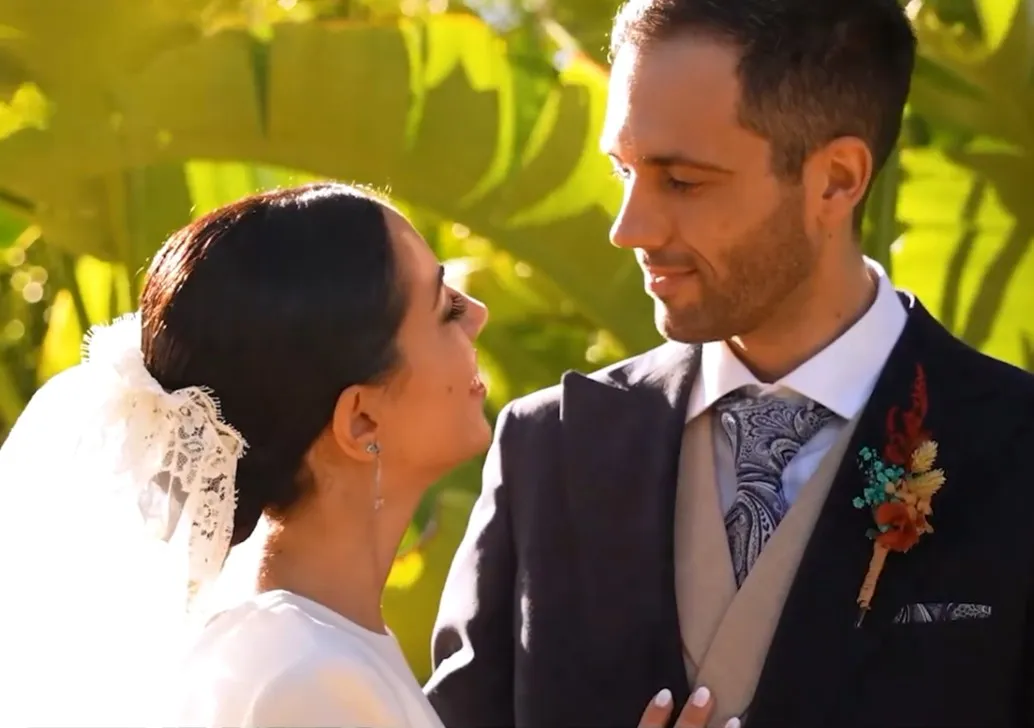
I record vows and speeches on discreet microphones worn close to the voice, which keeps them clear even when I am well back. Wind across an open terrace still reaches a microphone, and it moves veils, hair and flowers. Choose a ceremony spot with a wall, hedge or building behind you, and agree a sheltered second spot with your planner, so the change takes minutes if the wind rises.
Music is the other sound question. Amplified systems may need a limiter, and limits in residential areas tighten at 23:00. My coverage includes one hour of party, so ask your venue what happens to the music at 23:00 and place speeches and the first dance well before it.
August heat and the months either side
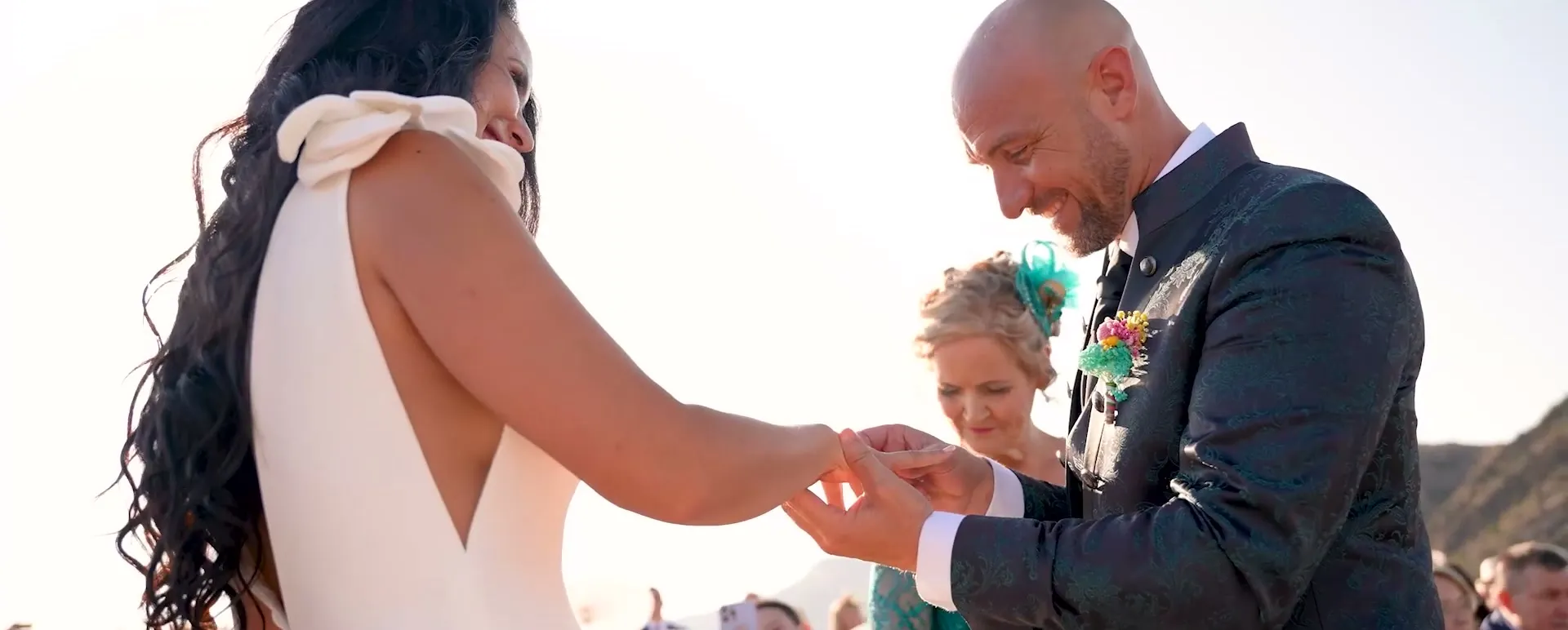
On the coast, afternoons in July and August average about 31 degrees, and June to August bring almost no rain. An outdoor plan is reliable then, but the day has to move around the heat. In August I would start the ceremony in the evening, ask your venue about shade for your guests and keep portraits for the last hour of light.
September stays dry with milder afternoons, so look at it first if you want an outdoor wedding without that heat. November and December are the rainy months, so choose a venue with a good indoor room.
The city holds no civil weddings during the August Feria, and La Concepción holds none on 8 September. From June to mid-October, motor vehicles are restricted on forest roads in Andalusia, with some exceptions, so check any mountain portrait spot before you plan around it. Inland, around Ronda, the weather differs, so ask your venue what evenings are like.
Where the drone can fly in Málaga, and where it cannot
A drone shot here is shaped by the rules before the view. It cannot fly over a concentration of people, so there is no aerial of guests seated at the ceremony or crowding the dance floor. It must stay in sight and under 120 metres, with further distances from people and built-up areas depending on the drone. In practice, the aerial is of the two of you alone in the landscape, or of the estate before the guests arrive.
That favours a cortijo among olive groves or a country estate near Ronda over the old town, the port or a busy beachfront, where I would plan the film without it. Zones around Málaga Airport are marked on the official drone map, so send me your address early and I can tell you what is possible. Wind can still ground it on the day, so treat the shot as a bonus and never as the idea your film rests on.