The Journal / Planning
Wedding Planning Checklist and Timeline: Month by Month, for a Wedding in Spain
What to do and when, from 12+ months before to the week after, with a wedding-day running order on Spanish hours and a short checklist to print.
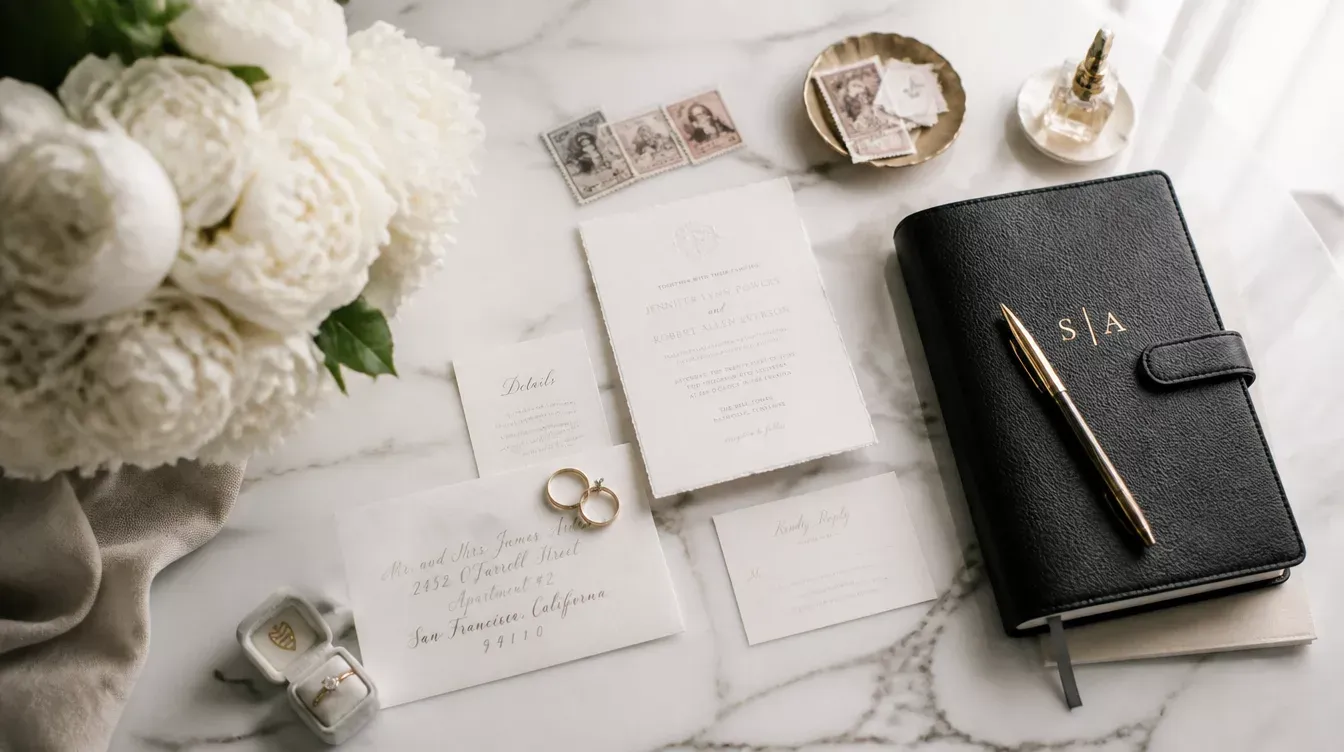
A wedding planning timeline works backwards from the date. Twelve months or more before, fix the budget, guest count, date and venue. Nine to twelve months before, choose the legal route, hire a planner and send save-the-dates. Six to nine months before, book the photographer, the filmmaker and the music. Three to six months before, send invitations and arrange travel. In the last three months you confirm, pay and rehearse. The week after, you say thank you.
That order holds for any wedding. A destination wedding in Spain adds three things: guests who fly, legal paperwork with its own calendar, and a day that runs on Spanish hours. I am Ismael, a wedding filmmaker based in Murcia, and I film weddings across Spain for couples who often plan everything from another country. This is the timeline I would hand them.
The Timeline at a Glance
| When | Main decisions | Specific to a wedding in Spain |
|---|---|---|
| 12+ months | Budget, guest count, date, venue | Choose the region and the season; visit if you can |
| 9 to 12 months | Planner, legal route, save-the-dates, room blocks | Ask your consulate and the civil registry about documents and lead times |
| 6 to 9 months | Photographer, filmmaker, music, caterer, outfits | Book earlier for Saturdays from May to October |
| 3 to 6 months | Invitations, transfers, hair and make-up, ceremony | Set the ceremony hour by the sunset |
| 1 to 3 months | Final numbers, seating, menu, running order | Sworn translations and final paperwork |
| Final week | Welcome, rehearsal, handover to the coordinator | Arrive early; check the forecast and the wind plan |
| Week after | Thanks, returns, certificates | Collect and register your marriage documents |
12 Months or More Before: Budget, Date and Venue

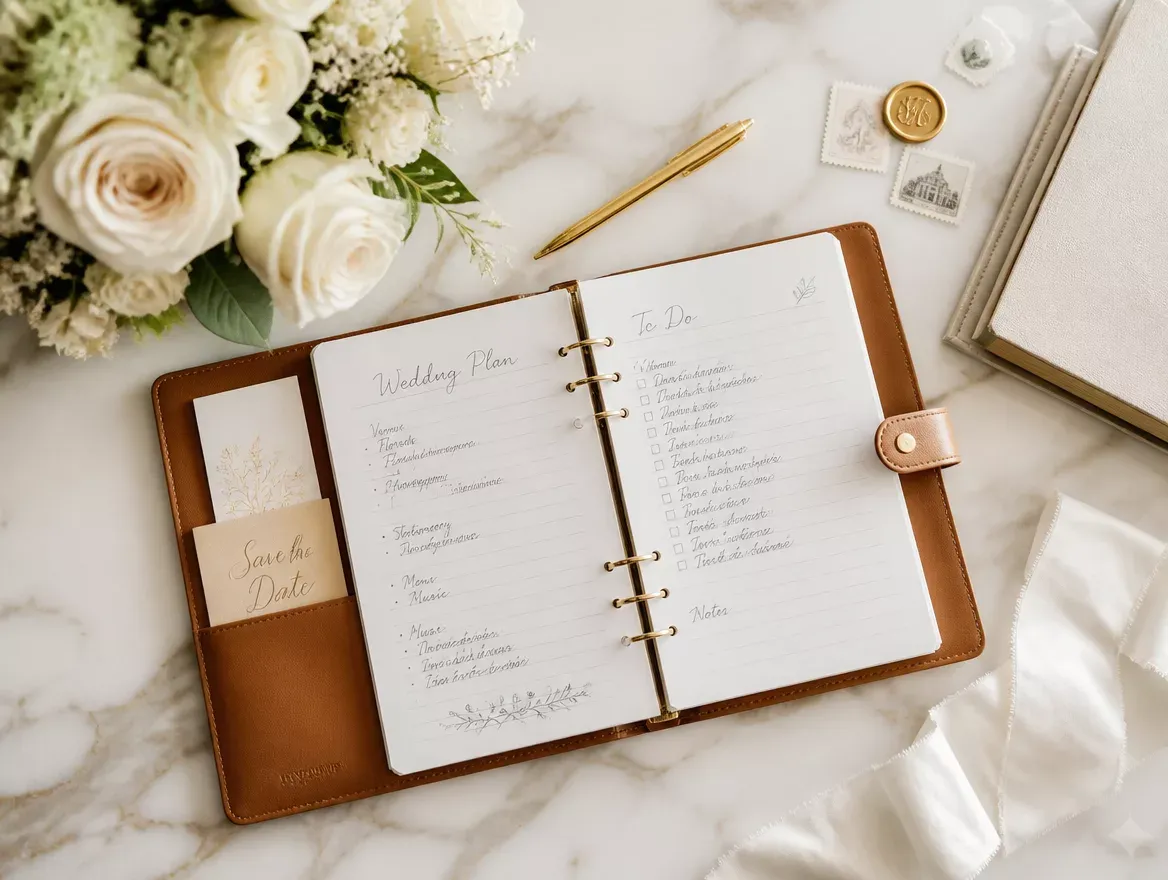
Three numbers come first: how much you will spend, how many people you will invite and how many of them are likely to travel. My guide to how much a wedding in Spain costs will help with the first.
- Agree a total budget and who contributes.
- Write a first guest list and mark who must be there.
- Choose a region and a season. May, June, September and October are the gentlest months in most of Spain; July and August are hot, and many Spanish businesses slow down in August.
- Shortlist venues, ask each for availability, and visit if you can. The guides to wedding venues in Spain and the best wedding venues on the Costa del Sol are a starting point.
- Check local holidays and festivals around your date, because they change flight and hotel prices.
- Sign the venue contract. Your date now exists.
9 to 12 Months Before: Legal Route, Planner and Save-the-Dates

Decide early how you will be legally married. Many international couples sign the legal marriage at home and hold a symbolic ceremony in Spain, which frees the place and the hour. A binding civil or religious ceremony in Spain is possible in some cases, and my guide to getting married in Spain as a foreigner explains the options.
Whichever you choose, treat the paperwork as a project with its own deadline. Requirements depend on your nationality, your residency and the registry or parish involved. Documents often need an apostille and a sworn translation, and some certificates are only valid for a limited period, so applying too early can be as much of a problem as applying late. Ask your consulate and the Spanish civil registry (or the parish) for the list and the lead time, in writing, before you promise guests a legal ceremony.
- Hire a planner or coordinator based in Spain if you are organising from abroad.
- Send save-the-dates. Guests who fly need more notice than guests who drive.
- Reserve room blocks near the venue and share two or three hotel options.
- Open a wedding website with airport, transfer and accommodation details.
If you are travelling from the UK, Ireland or the United States, I have written pages for UK couples, Irish couples and American couples marrying in Spain.
6 to 9 Months Before: Photographer, Filmmaker and Music

These are the suppliers who can only be in one place per day, so they go next.
- Book the photographer and the filmmaker. For my own calendar I advise 6 to 12 months ahead, and earlier for Saturdays from May to October. My guide to choosing a wedding videographer in Spain lists what to ask, and what a wedding videographer costs explains what you are paying for.
- Book the ceremony musicians and the band or DJ.
- Confirm the caterer if the venue does not have its own kitchen, and arrange a tasting.
- Choose the officiant or celebrant.
- Order the dress and the suit; fittings and alterations take months.
- Tell your filmmaker now if you would like drone footage. It depends on the weather and on local regulations, which need checking for each location.
3 to 6 Months Before: Invitations, Travel and the Ceremony
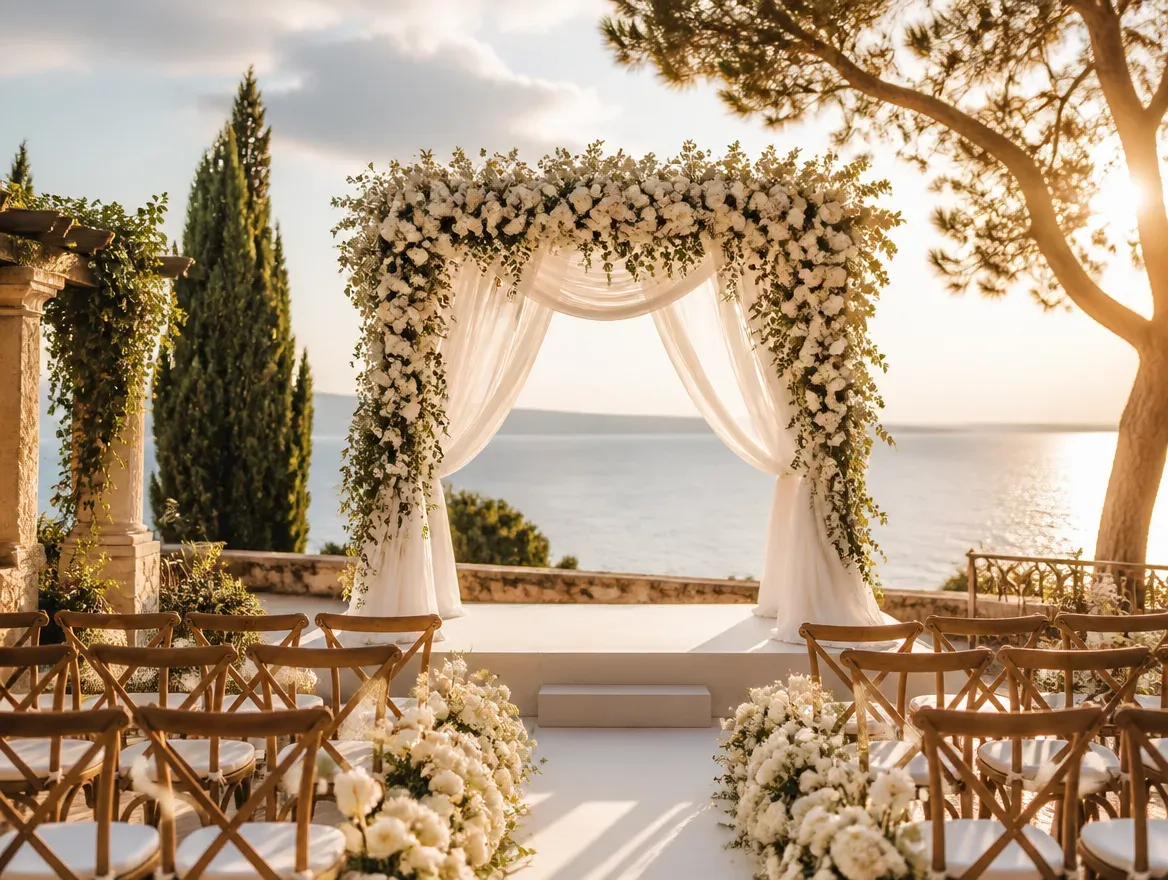
- Send formal invitations with a reply date about eight weeks before the wedding.
- Remind guests to check their passports and the entry rules for Spain.
- Book guest transfers between hotels and venue, including a late coach back.
- Book hair and make-up, with a trial if you will be in Spain beforehand.
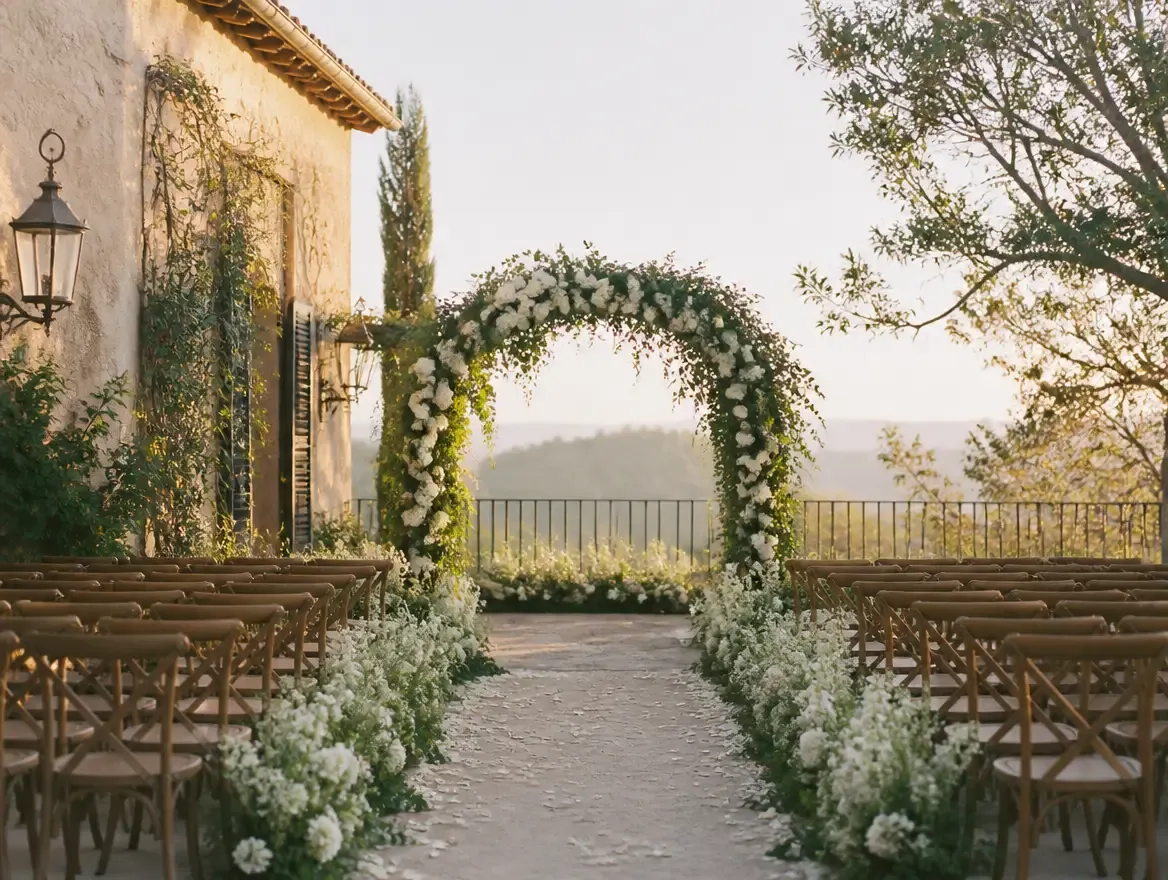
- Fix the ceremony hour. Look up the sunset for your date and place, and start two and a half to three hours before it.
- Write the ceremony: readings, music, vows and who speaks, and in which language. A bilingual ceremony needs a little more time.
- Agree a plan B with the venue for rain, wind and heat.
- Plan the days around the wedding: a welcome evening and perhaps a relaxed lunch the day after.
1 to 3 Months Before: Confirm Everything

- Chase late replies and give final numbers and dietary needs to the caterer.
- Finish the seating plan and order stationery.
- Complete the legal paperwork and any sworn translations.
- Write the running order and send it to every supplier.
- Hold a planning call with your photographer and filmmaker four to six weeks before. I use it to learn who matters most to you, who gives a speech and where they will stand, so their voices are recorded cleanly.
- Arrange the remaining payments and prepare envelopes for anything paid on the day.
- Wear in your shoes. Write your vows.
The Final Week
Arrive at least three days early if you are flying in. It gives lost luggage time to turn up and gives you time to slow down.
- Walk the venue with your planner at the hour of the ceremony.
- Check the forecast and confirm the plan B if needed.
- Hand over the suppliers’ phone numbers and the running order to one trusted person. From now on, questions go to them.
- Steam the dress, collect the rings, pack an emergency kit.
- Send the final running order to your photographer and filmmaker the evening before, with any change or surprise.
A Wedding-Day Running Order on Spanish Hours
Spain eats and celebrates late. Dinner at 21:30 is normal, the dancing starts around midnight, and many venues serve a late snack in the small hours. This example is for a June wedding in southern Spain, with sunset at about 21:40.
| Time | What happens |
|---|---|
| 13:30 | Light lunch; hair and make-up begin |
| 15:30 | Photographer and filmmaker arrive; details and getting ready |
| 17:15 | You are dressed; time with parents and close friends |
| 18:00 | Guests arrive; welcome drinks in the shade |
| 18:30 | Ceremony |
| 19:15 | Drinks reception and group photographs |
| 20:45 | Twenty minutes alone for the two of you in the last light |
| 21:15 | Guests are seated; your entrance |
| 21:30 | Dinner, with speeches between courses |
| 23:45 | Cake and first dance |
| 00:00 | Party |
| 02:00 | Late snack; first coach back |
For a wedding in October, when the sun sets before 20:00, move the whole afternoon about two hours earlier. Ask the venue when outdoor music must end and build the evening around that hour. If your guests are not used to Spanish hours, serve generous food at the drinks reception.
The Week After
- Send thanks to your suppliers; a review helps a small business more than you might think.
- Return hired items and send the dress to be cleaned.
- Collect your marriage certificate, or ask how to register the marriage in your home country if you married legally in Spain.
- Gather guests’ phone photos in one shared album.
- Write thank-you notes while the day is fresh.
- Ask your photographer and filmmaker when to expect delivery. My films take 2 to 4 months, depending on the season, because each one is edited calmly.
The Short Checklist to Print
- Budget and guest count agreed
- Region, season and date chosen
- Venue contract signed
- Legal route decided; documents and lead times confirmed with consulate and registry
- Planner or coordinator hired
- Save-the-dates sent; room blocks reserved
- Photographer and filmmaker booked
- Music, caterer and officiant booked
- Outfits ordered
- Invitations sent; replies tracked
- Transfers, hair and make-up booked
- Ceremony hour set by the sunset; plan B agreed
- Final numbers, seating plan and menu confirmed
- Running order sent to every supplier
- Planning call with photographer and filmmaker
- One person named to handle questions on the day
- Thanks, returns and certificates done

Where the Film Fits
I film in a documentary style, with natural light, real sound and no posing, and I coordinate with your photographer and planner before the day. You can read more about me and how I work, watch films on my wedding videographer in Spain home page or in the portfolio, and see what each collection includes. For destination weddings, collections start from €2,500. I film one wedding per date, so the first step is to check your date or book a video call; I reply personally within 24 hours.
Questions
How long does it take to plan a destination wedding in Spain?
Twelve months is comfortable for most couples and eighteen gives you first choice of venues for a summer Saturday. It can be done in six if you are flexible on the date, choose a weekday or a month outside high season, and decide quickly. The legal paperwork, if you want a binding ceremony in Spain, is usually what sets the minimum.
What should we book first?
The venue, because it fixes the date, the guest limit and the style of the day. A planner comes at the same time if you are organising from abroad. Photographer, filmmaker and music follow once the date is confirmed, since each of them can only take one or two weddings on a given day.
When should we send save-the-dates and invitations for a wedding abroad?
Send save-the-dates nine to twelve months ahead, as soon as the venue is confirmed, so guests can book leave and watch flight prices. Formal invitations go out four to five months before, with a reply date about eight weeks before the wedding. That leaves time for final numbers, transfers and the seating plan.
What time should the ceremony start in Spain?
In late spring and summer, most outdoor ceremonies start between 18:00 and 19:00, when the heat eases. A simple rule is to begin two and a half to three hours before sunset. In October that means around 17:00. Check the sunset time for your exact date and place before you print anything.
When should we book the wedding filmmaker?
I recommend 6 to 12 months ahead, and earlier for Saturdays from May to October. I film one wedding per date, so a date is either free or it is not. Checking takes one message through the contact form or WhatsApp, and I reply personally within 24 hours with the exact price.
Do we need a wedding planner if we already have this checklist?
A checklist tells you what to do; a planner based in Spain does much of it for you, in Spanish, with suppliers they already know. If you live abroad and cannot visit more than once, a planner or at least a coordinator for the final month and the day is worth serious thought.